
We've Specially Developed the Best Vegetable-Tanned Leather
Our vegetable-tanning process was first developed in ancient times when nothing but natural tree bark and certain plant and animal extracts were available to the early local tanneries.
For months at a time the hides are left to soak in tanning pits dug into the ground and filled with specially prepared mixtures of organic elements. The best of these stiff, dried-out and uncolored hides are set aside for our use. From this so-called "crust leather," we re-select and grade the skins based on thickness and character. At this point, the hides are carefully placed by hand into wooden drums with our exclusive blend of bark extracts, fat liquors and organic dyes. The drums rotate slowly and are carefully monitored for hours until the color is struck through the entire thickness and the moisture level is balanced throughout the hide.
Each batch and color reacts differently. In order to achieve the character we desire, no set timetable can be held. The master tanner must process each drum individually and the cycle is complete only when, in his estimation, perfection in color and texture has been achieved. As the hides are carefully removed for drying, we see the remarkable transformation from rough and wrinkled crusts to smooth, supple, full-grained leather of outstanding quality and character.
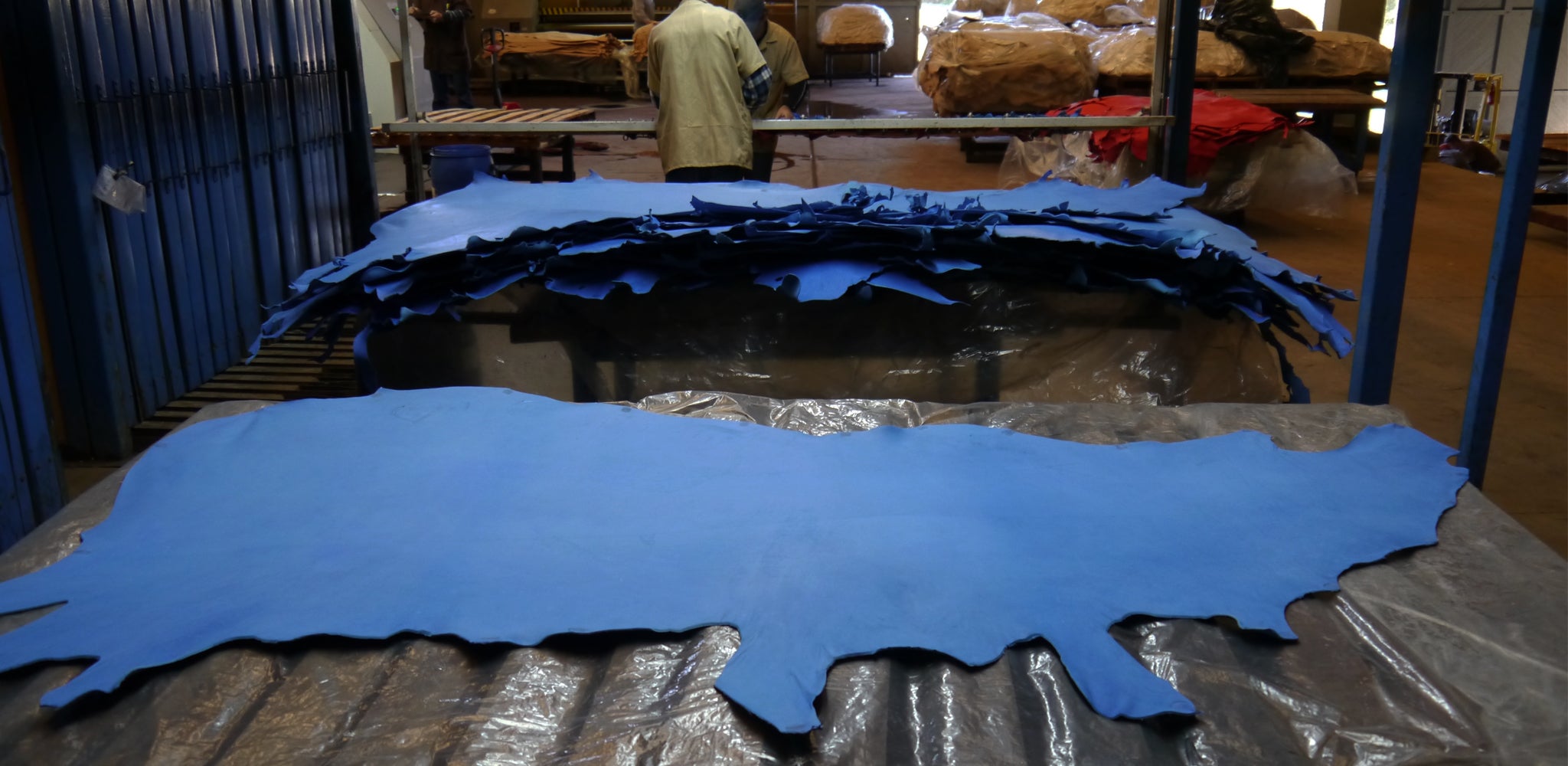
This is a slow process dependent on the skill and artistry of passionate and committed tanners. It is the careful attention of dedicated tanners and their refusal to compromise on materials and the time necessary to achieve the desired result that differentiates our vegetable-tanned leather from all other leathers available in this specialized market.
Instead of peeling and cracking as painted chromium tanned leathers do, our leather develops its own patina, changing gradually in appearance and taking on the character of its user over time. The scars, scratches, veins and wrinkles that give each piece in our collection its unique character have not been sanded down or buffed. We specifically chose not to cover minor imperfections with paint sealers or artificial finishes, using only clear dyes in a range of colors that enhance rather than conceal the beautiful character of our leather.
It takes time, skill and dedication to achieve outstanding results in any natural material; every hide must be treated as an individual project.

Cutting
So we've got our whole cuts of uncorrected vegetable tanned leather laid out before us. What's next? Cutting. Cutting sounds easy enough, right? In fact, it's quite an intricate process, especially when only the most superior final product is acceptable to us. It's an exercise that takes much time, effort, and skill, but is wholly worth it.
Because we use whole cuts of leather instead of smaller panels pieced together, we must cut much larger pieces than you might think. On an uncorrected hide, this is very difficult to do. Tears, brands, and bites are just a few of the likely culprits that can mar a hide, and we are able to only use parts of the hide that are defect free. Our New England Yankee ethic employs us to use all those defect-free parts to ensure that nothing of use is wasted.

Each hide, of course, has a particular use and purpose and must be carefully analyzed and classified. There are two types of grain - close or pebble - and they define the aesthetic. The neck and shoulder sections provide the structure and durability of the bag. Thinner sections may be used for inside pockets or interior linings, provided they are split to the appropriate thickness.
For example, a hide used for our Working Tote must include a large section of absolutely perfect close or pebble grained hide for the tote's two body panels. We might find one panel suitable for the tote in every third hide. Or, if we're lucky, we might find two panels in one hide. It varies with each batch of leather. If we are searching for suitable leather for a bottom layer of a bag, we must look to the durable neck or shoulder of the hide. Handles or straps must be cut from the straight or curved backbone section of the hide, depending on how we apply them.
Being meticulous and thorough is not a luxury, but a necessity. The way a Lotuff Leather good is cut defines the character and shapes its intangible quality.
The cutting and preparing by hand - what we call the bench work - are our greatest manufacturing bottlenecks. This is what differentiates us from the typical manufacturing process. We continue to use uniquely skilled workers for this process and, in turn, are teaching new ones so that we can birth and nurture a new generation of American craftsmen.